Emotionally Focused Therapy for Couples
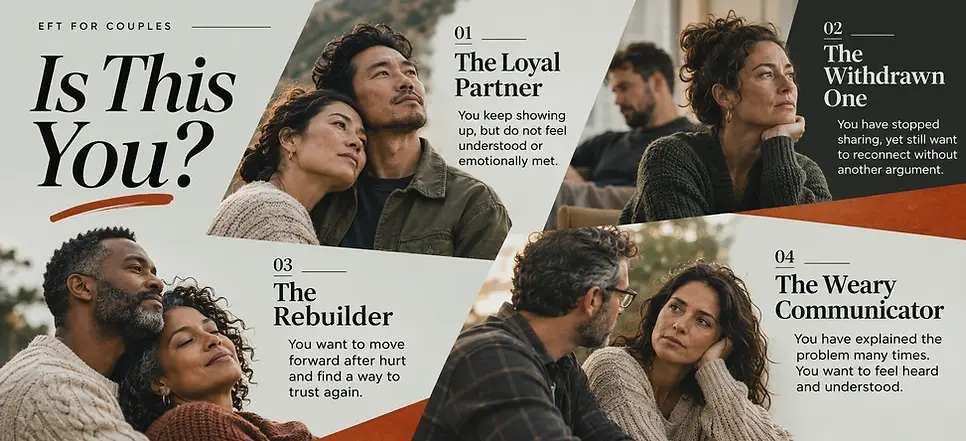
Understanding Emotional Connection in Couples
Emotionally Focused Therapy for couples examines how partners reach for connection, respond to distress, and protect themselves when a relationship feels uncertain. It draws on attachment theory, which considers the importance of accessible, responsive relationships in emotional life.
Couples may seek help because arguments repeat, closeness has faded, or trust has been disrupted. The immediate disagreement matters, alongside the emotions and expectations that shape each partner’s response. An argument about a practical responsibility may also involve feeling unimportant, unsupported, or afraid of disappointing someone. Exploring these meanings can help explain why familiar solutions have not resolved the distress.
Recognizing the Cycle Beneath Conflict
In a recurring cycle, each person’s protective response can intensify the other’s distress. One partner may press harder for a response as the other becomes quieter or more defensive. Both can end up feeling less secure, even when their intention is to preserve the relationship or prevent an argument.
These patterns vary between couples and across situations. The purpose of mapping a cycle is to understand how it unfolds and what sustains it. Emotional understanding also needs to include the effects of behavior, the ability to take responsibility, and the practical conditions surrounding the relationship.
Identifying a shared pattern does not make partners equally responsible for every action. Harm, intimidation, and breaches of trust require direct attention rather than being explained away as communication difficulties.
How the Work Supports Change
EFT typically begins by identifying patterns and reducing escalation. As the work develops, partners explore less visible feelings and needs and practice expressing them in ways the other person can receive. The therapist helps slow down exchanges, clarify emotional meaning, and support more responsive interactions.
Later work strengthens these changes through everyday conversations and decisions. The aim is greater flexibility: recognizing a familiar reaction earlier, communicating with more clarity, and responding with greater emotional availability. Progress depends on the couple’s circumstances, participation, and capacity to engage safely.
Assessment helps establish the focus and suitability of treatment. Where fear, coercion, or ongoing violence limits either partner’s freedom to speak, safety and treatment planning take priority. Couples work should support informed choices about the relationship, with goals discussed openly rather than assuming that reconciliation is always the outcome.
Frequently Asked Questions
Is EFT mainly about expressing more emotion?
EFT focuses on understanding emotion and how it organizes interaction. Partners are helped to recognize what happens during difficult exchanges and communicate feelings and needs more clearly. Emotional expression is paced within the work, with attention to responsiveness, safety, and each person’s readiness.
How is EFT different from learning communication skills?
Communication techniques focus on how conversations are conducted. EFT also explores the attachment concerns and emotional responses that make those conversations difficult. Skills and emotional understanding can work together, helping partners recognize a familiar cycle and respond differently when it appears in daily life.
Can couples therapy help after trust has been damaged?
Therapy can provide a structured setting to understand the injury, its effects, and whether repair is possible. Accountability, openness, and a willingness to engage are important. The approach and pace depend on the circumstances. Therapy cannot guarantee renewed trust or a particular relationship outcome.
What if one partner is uncertain about staying together?
That uncertainty should be discussed early so the goals and suitability of couples work can be assessed. Partners may need help clarifying their intentions before beginning work aimed at reconnection. The process should allow both people to make informed decisions without pressure to reach a predetermined outcome.
Is psychological testing part of every couples therapy process?
No. Interviews and discussion are central to understanding the relationship. When a specific clinical question warrants it, assessment may add information about personality or functioning. Its purpose, consent arrangements, and use in the work should be explained before testing is introduced into treatment.