Self Development and Personal Growth: A Practical Roadmap for Lifelong Learning

In 2026, the pace of change feels relentless. Remote work has blurred the lines between professional and personal life. Digital tools evolve faster than most people can adapt. Information overload makes it harder than ever to focus on what truly matters. Against this backdrop, self development and personal growth have become essential skills—not luxuries reserved for those with extra time.
This guide offers a practical roadmap for improving oneself through deliberate daily actions. You’ll learn how to build self awareness, set meaningful goals, develop habits that stick, and cultivate the support systems that accelerate progress. The path isn’t about quick fixes or passive consumption of self help content.
It’s about active practice, honest reflection, and sustained behavior change. Progress will be incremental. Setbacks will happen. But small actions compound into significant transformation over months and years.
Be Present: Building Self Awareness in Daily Life
Self-awareness is the first step in personal growth, allowing individuals to notice their thoughts, feelings, and reactions, which creates space for intentional responses rather than impulsive reactions. Without this foundation, you’ll repeat patterns without understanding why—and wonder why your efforts at self improvement keep stalling.
Practical ways to practice presence:
Focus on one task at a time instead of constant multitasking
Take 5-minute breathing breaks between meetings or work blocks
Put your phone away during meals and conversations
Notice when your mind drifts to the past or future, then gently return to the present
Practicing self-awareness can help individuals recognize patterns in their behavior and emotions, leading to improved emotional intelligence and better decision-making. When you understand how you react to stress, criticism, or uncertainty, you gain the ability to respond thoughtfully rather than impulsively.
Try a daily awareness check-in using three simple questions:
What did I do well today?
What challenged me?
What did I learn?
This process takes five minutes in the morning or evening. Over weeks, you’ll perceive shifts in your emotional patterns and develop genuine self knowledge. Presence reduces anxiety about the future and rumination about the past, creating mental space for real growth rather than being consumed by worry.
Plan Ahead: Turning Self Improvement Intentions into Action
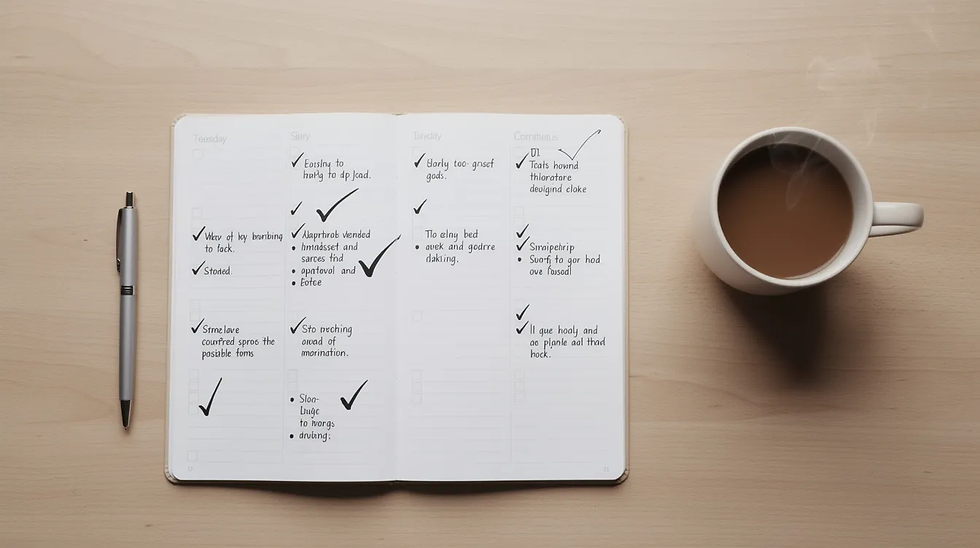
Most people know what they want to improve but struggle to translate intentions into consistent action. The gap between inspiration and execution closes when you develop intentional planning habits.
Nightly planning practice:
Write a simple to-do list before bed
Prioritize 1-3 important tasks for the next day
Morning routines can significantly impact overall productivity and mood, so decide the night before what yours will include
Planning ahead lowers stress, improves sleep quality, and prevents decision fatigue when you wake up. Your brain isn’t wasting energy deciding what to do—you’ve already committed.
Setting specific, measurable, achievable, relevant, and time-bound (SMART) goals can significantly enhance the likelihood of achieving personal objectives. Compare these two goals:
Vague Goal | SMART Goal |
“Get healthier” | “Walk 20 minutes, 4 days a week” |
“Read more” | “Read 15 pages before bed each night” |
“Be more productive” | “Complete deep work blocks from 9-11am daily” |
Breaking larger goals into smaller, manageable steps can build confidence and provide sustainable motivation, making long-term change more likely. Working in uninterrupted “deep work” blocks can optimize productivity while reducing the sense that you’re constantly behind.
Weekly review ritual:
Every Sunday night, spend 15 minutes reviewing your week. Celebrate wins—even small ones. Adjust plans that aren’t working. Realign your schedule with your personal growth goals. This simple habit prevents drift and keeps you focused on what matters.
Keep a Journal: Writing Your Personal Development Story
Self-awareness can be enhanced through practices such as journaling, which allows individuals to reflect on their thoughts and identify areas for improvement. Research consistently supports writing as a low-cost, high-impact tool for emotional processing and tracking progress.
Effective journaling formats:
Gratitude lists: Three things you’re thankful for today
Habit trackers: Simple visual records of daily commitments
Reflection prompts: “What went well today? What did I learn?”
Idea capture: Notes from self help books, courses, articles, or conversations
Keeping a gratitude journal can help you appreciate what you have and transform your attitude towards life. The act of writing forces clarity that thinking alone doesn’t achieve.
When you review entries from previous months, patterns in mood, triggers, and progress become visible. You might notice that your energy drops after certain types of meetings, or that morning exercise correlates with better afternoon focus. These insights guide smarter decisions.
Start with 5-10 minutes daily—morning or evening works equally well. The point is consistency, not length. Even a few sentences create a record of your journey that becomes increasingly valuable over time. Journaling also supports lifelong learning by capturing ideas worth remembering.
Prioritise Yourself and Set Boundaries
Sustainable self development requires saying “yes” to yourself and “no” to excess demands. Prioritizing self-care is essential for enhancing overall wellbeing, as it allows individuals to focus on their own needs and interests, which can lead to improved mental health and resilience. This isn’t selfishness. Restored energy helps others too. You can’t pour from an empty cup, as the saying goes.
Practical boundary examples:
Limiting overtime to specific days rather than accepting it as default
Scheduling non-negotiable focus blocks where you’re unreachable
Protecting sleep time by setting a firm “screens off” hour
Declining invitations that don’t align with your values or goals
Learning to say “no” reduces burnout, resentment, and the people-pleasing patterns that block personal growth. Many people feel overwhelmed precisely because they’ve never examined which obligations truly matter versus which they’ve absorbed from external expectations.
Boundary-setting exercise:
List your current obligations—work commitments, social events, recurring tasks, favors for others. Mark which ones genuinely align with your values and goals. Circle items you’ve continued out of guilt or habit rather than genuine desire. Consider which could be reduced, delegated, or eliminated.
Developing emotional regulation skills involves recognizing emotional responses and managing them in ways that support thoughtful action, rather than impulsive reactions. When you protect your time and energy, you create the conditions for real development rather than constant recovery from overextension.
Try Something New: Stepping Outside Your Comfort Zone
Novelty drives brain plasticity, self confidence, and self improvement. When you step outside familiar routines, you build neural pathways that support adaptability and resilience—exactly the qualities needed in a rapidly changing world.
2026 ideas for trying something new:
Learn a new digital skill (AI tools, video editing, coding basics)
Join a local club (hiking groups, language exchanges, hobby meetups)
Try a creative activity once weekly (painting, pottery, music)
Explore a neighborhood or part of your city you’ve never visited
Think “tiny experiments” rather than drastic life changes. You don’t need to quit your job or move across the country. Small, low-risk novelties keep growth continuous without overwhelming your capacity to adapt.
Research shows that change benefits mental health and resilience. Effective self-development strategies involve small, consistent actions known as micro-habits—these tiny experiments qualify.
30-day challenge:
Choose one new activity for the next month. Track how it affects mood and confidence in your journal. At the end, decide whether to continue, modify, or try something else. This approach keeps the process manageable while ensuring continuous progress.
Care for Your Body: Movement, Rest, and Mood

The link between physical wellbeing and personal development is direct and measurable. Energy levels, focus capacity, and motivation all depend on how you treat your body. Neglect sleep or movement, and your capacity for growth diminishes regardless of your other efforts.
Simple daily movement ideas:
A 20-minute walk during lunch or after dinner
Stretching at your desk every hour
Short home workouts without equipment
Taking stairs instead of elevators
Engaging in regular physical activity, even as little as 20 minutes a day, can significantly improve mental health by releasing mood-boosting endorphins and enhancing overall wellbeing.
Sleep hygiene essentials:
Practice | Why It Matters |
Consistent bedtime | Regulates circadian rhythm |
Limiting screens before bed | Reduces blue light disruption |
Calming pre-sleep routine | Signals body to wind down |
Cool, dark room | Optimizes sleep quality |
Unplugging from devices at least one hour before bed can improve sleep quality. This simple change often produces noticeable benefits within days.
Basic nutrition supports clearer thinking and emotional regulation without requiring complex diets. Focus on balanced meals, adequate hydration, and reducing processed foods where practical. Caring for your body creates the physical foundation for sustained lifelong learning and every other aspect of personal development.
Gratitude, Comparison, and Mindset Shifts
Mindset habits shape the emotional climate of self development. Two people with identical circumstances can experience vastly different feelings based solely on their mental framing—one focused on what’s missing, the other on what’s present.
Daily gratitude practice:
List three concrete things you’re grateful for, ideally tied to the current day. Not vague categories like “health” but specific moments: “The conversation with my friend at lunch. Finishing that project ahead of deadline. The quiet hour I had this morning.”
Research published in Einstein indicates that individuals who cultivate gratitude tend to have better mental health and less anxiety and depression. Practicing gratitude can lead to increased happiness and a reduction in negative emotions, as it shifts focus from what is lacking to what is present.
Managing comparison:
Social media creates endless opportunities for comparison—and most of it is harmful. Strategies that help:
Schedule digital detox hours daily
Curate feeds to remove accounts that trigger comparison
Remind yourself you’re seeing highlight reels, not reality
Compete only with your past self. Track your own progress using simple metrics: steps walked, pages read, hours studied, new skills learned. This approach keeps motivation intrinsic rather than dependent on external validation.
Reducing complaining and reframing setbacks as learning opportunities supports long-term personal growth. When something goes wrong, ask “What can I learn?” rather than “Why does this always happen to me?”
Practicing mindfulness and being present in the moment can help individuals appreciate their daily experiences and reduce stress, contributing to better self-care.
Stay Connected and Pay It Forward
Social connection is a critical but often overlooked element of personal development. Growth doesn’t happen in isolation. Relationships provide accountability, perspective, and support that accelerate every other area of improvement.
Intentional relationship maintenance:
Regular calls with friends—scheduled, not left to chance
Family dinners or shared monthly activities
One-on-one time with co workers outside work contexts
Reconnecting with people you’ve lost touch with
Consider joining groups related to specific self improvement goals. Language classes, professional meetups, and support groups provide both accountability and community. Finding others on similar journeys makes the path feel less lonely.
Developing empathy and communication skills strengthens personal connections. Strong communication skills can improve relationships by allowing individuals to respond thoughtfully rather than react impulsively during challenging interactions.
Volunteering, mentoring, or informal helping roles deepen empathy and reinforce personal growth lessons. Teaching something you’ve learned reveals gaps in your own understanding. Listening to others’ challenges often illuminates your own blind spots.
Practicing active listening, which involves fully concentrating, understanding, responding, and remembering what is being said, is a key component of effective communication. Giving support often accelerates self knowledge as much as receiving it.
Guides, Coaches, and Structured Learning
You don’t have to walk the self development path alone. Guides can shorten learning curves significantly, helping you avoid common mistakes and maintain momentum through difficult periods.
Types of external support:
Role | Primary Function | Example Use |
Mentor | Shares wisdom from experience | Career guidance, life advice |
Coach | Helps clarify goals and provides accountability | Goal implementation, skill building |
Therapist | Addresses mental health concerns | Depression, anxiety, trauma processing |
Self-development improves self-awareness, confidence, and resilience, impacting both personal and professional life. Working with a professional coach for your personal growth can boost self-esteem and accelerate achievement—there’s no faster way to kickstart progress than having someone work directly with you on your goals. |
Self-development improves self-awareness, confidence, and resilience, impacting both personal and professional life. Working with a coach can boost self-esteem and accelerate achievement—there’s no faster way to kickstart progress than having someone work directly with you on your goals.
Structured environments like workshops, online courses, or retreats provide focused, time-bound progress. Committing to a single personal growth practice for a set period allows for deeper integration and understanding, which can lead to more meaningful change.
Recommendation: Commit to one program or teacher for 3-6 months instead of constant “course hopping.” Fragmented effort prevents deep learning. The ultimate goal is autonomy—applying skills in everyday adult life after leaving structured programs.
Career advancement is facilitated by gaining new skills that enhance competitiveness. Whether you’re developing communication abilities, emotional intelligence, or technical expertise, external guidance often provides frameworks that self-study lacks.
Embrace Lifelong Learning

Lifelong learning is the ongoing, voluntary, and self-motivated pursuit of knowledge for personal or professional development. In a fast-changing world, this commitment isn’t optional—it’s essential for staying relevant and adaptable throughout your life.
The concept of lifelong learning is rooted in the idea that learning is a continuous process that occurs throughout an individual’s life, adapting to changing circumstances and needs.
Practical ways to keep learning:
Read non-fiction books aligned with your development goals
Take online courses during commutes or lunch breaks
Listen to podcasts that expand your knowledge in specific areas
Attend workshops or conferences in your field
Follow thought leaders whose ideas challenge your thinking
Embracing lifelong learning can enhance intellectual curiosity and help individuals maximize their potential throughout their lives.
Annual development theme:
Choose a focus area for each year—perhaps “emotional intelligence in 2027” or “financial literacy in 2028”—and select materials around that theme. This creates coherence in your learning rather than scattered consumption.
Learning should cover both professional skills and personal topics like relationships, creativity, and communication. Effective communication is a skill that can be developed through intentional practice and learning, which is essential for personal development.
Self improvement is a marathon, not a sprint. Skills compound over years, not weeks. Curiosity keeps the process enjoyable rather than feeling like a chore. Expect to revisit the same principles from different levels of understanding as you mature.
Frequently Asked Questions
What is the difference between self development and self help?
Self help often refers to consuming content—books, videos, podcasts—for inspiration and ideas. Self development emphasizes sustained action, practice, and measurable behavior change. Reading about improvement is a starting point, but transformation requires implementation.
Self development usually includes goal setting, tracking behavior over time, and building specific skills like emotional regulation or communication. You’re not just learning concepts—you’re integrating them into daily life through repeated practice.
Self help books and articles can be useful starting points if they lead into a concrete personal growth plan. The key question isn’t “What did I read?” but “What did I do differently as a result?”
How do I start my self development journey if I feel overwhelmed?
Begin with a 7-day experiment focused on one tiny habit. Perhaps 5 minutes of journaling each morning or a 10-minute walk after lunch. Effective daily self-development includes starting mornings with reflection or exercise and setting daily priorities.
Limit new goals to one or two at a time to avoid burnout and decision fatigue. Trying to overhaul everything simultaneously guarantees failure. Small wins build confidence and create momentum for bigger changes later.
Write a simple “why” statement explaining your reason for wanting to grow. Revisit it each morning, especially when motivation dips. Having a clear sense of purpose helps you persist through inevitable challenges.
How long does meaningful personal growth usually take?
Small changes can be felt within 2-4 weeks. You might notice improved mood from daily walks or better sleep from consistent bedtime routines. These early wins matter because they demonstrate that change is possible.
Deeper habit and identity shifts typically require 3-12 months of consistent effort. Developing emotional regulation, transforming communication patterns, or building new career skills takes sustained practice across many situations.
Emotional regulation is the ability to manage and respond to emotional experiences in a healthy way, which is essential for personal development and well-being. This capacity develops gradually through repeated practice in challenging moments.
Track monthly progress rather than day-to-day fluctuations to avoid discouragement. Self development is a lifelong process, with different seasons focusing on different skills or areas of life.
What should I do when I lose motivation or fall off track?
Normalize setbacks as part of any self improvement process rather than signs of failure. Everyone experiences dips in motivation, periods of inconsistency, and moments of doubt. What matters is how you respond.
Practical resets when motivation drops:
Shrink the habit (from 30 minutes to 5 minutes)
Revisit your original reasons for starting
Ask a friend for accountability
Change your environment to reduce friction
Review and adjust goals quarterly so they remain realistic and aligned with current life circumstances. Goals set six months ago may no longer fit your reality. Adaptation isn’t failure—it’s intelligence.
Practicing emotional regulation can lead to improved relationships, as it allows individuals to respond thoughtfully rather than react impulsively during conflicts or misunderstandings—including conflicts with yourself about perceived failure.
Do I really need a coach or therapist for self development?
Many people start solo using books, courses, and journaling. These tools provide genuine value and can produce significant progress for those with discipline and self-direction.
However, external support can accelerate growth considerably. Therapists are important when mental health issues like depression, anxiety, or trauma interfere with daily functioning. These conditions aren’t character flaws—they’re challenges that respond well to professional help.
Coaches or mentors can be especially helpful for career development, communication skills, and goal implementation. They provide accountability, objective feedback, and frameworks you might not develop independently. Consider your specific needs, budget, and available resources. Even informal mentorship from someone further along in their journey can provide valuable guidance and hope when the path feels unclear.
Conclusion: Making Self Development a Lifelong Habit
Self development and personal growth aren’t destinations you reach and then forget about. They’re ongoing processes that evolve with each stage of adult life—from early career challenges through midlife transitions and beyond. The pillars covered in this guide—self awareness, intentional planning, daily habits, and supportive relationships—work together as a system. Strengthen one area, and the others benefit. Self-awareness helps you set better goals. Better goals guide your habits. Strong habits build the confidence to try new things. And supportive connections provide accountability and perspective throughout.
Choose one concrete action within the next 24 hours. Start a journal tonight. Schedule a 20-minute walk tomorrow. Plan your week on Sunday evening. The specific action matters less than taking it. Consistency beats intensity every time. Small, repeated actions over months and years shape character and capabilities far more than occasional bursts of effort. You’re building a life aligned with your values through continuous self improvement and lifelong learning. The journey itself is the reward.