Who Can Diagnose ADHD in Adults?
- ultra content
- May 29
- 9 min read

Attention deficit hyperactivity disorder (ADHD), sometimes called attention deficit disorder, is a neurodevelopmental condition affecting the brain and nervous system that frequently persists from childhood into adulthood. Adults with ADHD may experience symptoms of inattention, hyperactivity, and impulsivity that interfere with daily functioning in areas such as work, home, and social relationships. Many adults first consider seeking a diagnosis after years of unexplained struggles—or after their own child is diagnosed with ADHD.
Here’s the critical point: there is no blood test or brain scan that confirms ADHD. The diagnosis relies entirely on a structured clinical assessment conducted by a qualified healthcare professional. This raises the central question many adults ask: who can diagnose ADHD in adults?
This article explains exactly which mental health professionals and healthcare providers are qualified to diagnose adult ADHD, what a comprehensive ADHD evaluation involves, and how to choose the right provider for an accurate diagnosis and treatment plan.
Who Can Diagnose ADHD in Adults? (Profession Types and Roles)
An accurate diagnosis for adult ADHD should be conducted by specialists, due to significant differences in its presentation compared to childhood ADHD. Qualified professionals for adult ADHD evaluation include psychiatrists, clinical psychologists, neuropsychologists, primary care providers, and advanced practice nurses. Here’s how each professional type contributes:
Psychiatrists are medical doctors who specialize in mental health and can assess symptoms, review medical history, and prescribe medication for ADHD treatment. They excel in complex cases involving multiple mental health disorders or when conditions like bipolar disorder or substance abuse need to be ruled out.
Clinical psychologists (PhD or PsyD) are trained to perform detailed ADHD evaluations, administer psychological assessments, and provide therapy. Psychologists use interviews, questionnaires, and psychological assessments to evaluate ADHD symptoms, although they cannot prescribe medication in most states.
Primary care physicians (family doctors, internists) often serve as the first point of contact for adults seeking an ADHD diagnosis. They can conduct initial ADHD screening, manage straightforward cases, and refer patients to specialists when needed.
Neurologists contribute when ADHD symptoms overlap with possible neurological conditions such as epilepsy, traumatic brain injury, or cognitive disorders affecting the nervous system.
Psychiatric nurse practitioners (PMHNPs) and physician assistants (PAs) may diagnose ADHD and manage treatment under specific licensure and supervision rules that vary by state.

Licensed psychologists, psychiatrists, neurologists, and certain pediatricians are qualified professionals who can diagnose ADHD in adults, as they have received specialized training in ADHD symptomatology and diagnosis.
Important: ADHD coaches, school counselors, and online screening tools cannot make a formal ADHD diagnosis in adults. While they may support your journey, only trained healthcare providers can provide an official diagnosis.
What Makes an ADHD Diagnosis “Official” and Accurate?
An official ADHD diagnosis is one documented by a licensed healthcare professional using accepted clinical guidelines. This documentation is essential for medical treatment, prescription medications, legal purposes, and workplace accommodations.
For a diagnosis to be accurate, the clinician must confirm:

A persistent pattern of ADHD symptoms that started before age 12
Impairment in two or more settings (such as work, home, or relationships)
Symptoms that are not better explained by another mental health condition
Many conditions can mimic ADHD, such as anxiety, depression, sleep disorders, and thyroid issues, necessitating a thorough screening for co-occurring mental health issues. Clinicians must use the diagnostic criteria from the Diagnostic and Statistical Manual (published by the American Psychiatric Association) to ensure consistency and accuracy.
Self-diagnosis based on quick online quizzes, social media content, or informal opinions from friends does not qualify as an official diagnosis. Without a proper diagnosis from a healthcare professional, you cannot access prescription medication, formal ADHD treatment, or legal accommodations.
How Is Adult ADHD Diagnosed? (DSM-5-TR Criteria and Age Group Differences)
Mental health professionals use the American Psychiatric Association’s Diagnostic and Statistical Manual (DSM-5-TR) criteria to ensure consistent ADHD evaluation across every age group, including the unique challenges of accurately diagnosing ADHD in teenagers. Here’s what the diagnostic process looks like for adults:
Criteria Component | Adult Requirement (17+) | Child Requirement |
Inattention symptoms | 5 or more | 6 or more symptoms |
Hyperactive-impulsive symptoms | 5 or more | 6 or more symptoms |
Duration | Present for at least 6 months | Present for at least 6 months |
Onset | Symptoms present before age 12 | Symptoms present before age 12 |
Settings | Symptoms affect two or more settings | Symptoms affect two or more settings |
Symptoms of adult ADHD must have been present before the age of 12 according to the DSM-5 criteria, even if the person was never formally diagnosed with ADHD as a child. ADHD symptoms must manifest in two or more settings (e.g., at home and at work) to meet diagnostic criteria. |
ADHD presentations include predominantly inattentive type, predominantly hyperactive-impulsive type, or combined type. In adults, inattentive symptoms often dominate—difficulty paying attention, making careless mistakes, and struggling with organizational skills. Many adults with ADHD report feelings of restlessness and may engage in impulsive behaviors, which can complicate their daily lives and responsibilities, and late or missed diagnosis can intensify shame, regret, and self-blame in adults with ADHD. The detailed DSM criteria should be applied by trained healthcare providers, not used as a substitute for professional ADHD evaluation.
What Happens in a Comprehensive ADHD Evaluation for Adults?
A full ADHD evaluation can take one to three hours, depending on the complexity of the case and the age of the individual being assessed, and may require follow-up appointments for further testing or treatment planning.
Adult ADHD diagnosis typically involves interviews, standardized questionnaires, and ruling out other conditions after gathering a detailed medical history. The ADHD evaluation process typically involves a comprehensive assessment that may include clinical interviews, questionnaires, and behavioral observations to gather information about the individual’s symptoms and history.
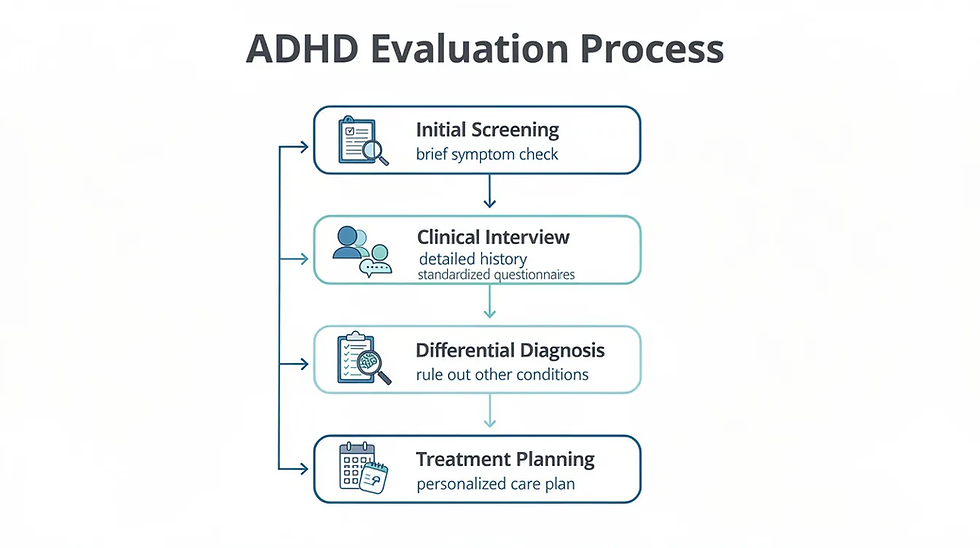
Here’s what to expect during the assessment process:
Clinical interview: The provider asks about current symptoms, work history, relationships, education, medical history, and how symptoms affect daily life and daily functioning.
Developmental history: The clinician explores childhood behavior, school performance (including any behavioral problems noted by teachers), and whether inattention symptoms or hyperactivity were present before age 12. Old report cards noting “daydreams” or “fidgets” provide valuable evidence.
Standardized rating scales: Tools like the Adult ADHD Self-Report Scale (ASRS) and behavior rating scales help quantify symptom patterns. Symptom checklists are completed by the patient and sometimes by family members or partners.
Collateral information: With permission, clinicians may interview partners, close friends, or family members to confirm how symptoms appear in everyday situations.
Physical exam or lab tests: Basic tests may rule out medical conditions that can produce similar symptoms, such as thyroid disorders or sleep apnea affecting cognitive functioning.
Assessment for co-occurring conditions: The goal is to identify any anxiety disorder, mood disorder, learning disabilities, depression, or substance abuse that may complicate the picture.
Diagnosing ADHD is a multi-step process that includes gathering information from various sources, such as family members, teachers, and medical history, to ensure an accurate diagnosis.
Which Professional Should You See First for Possible Adult ADHD?
If you’re experiencing symptoms that suggest adult ADHD, choosing the right starting point matters. Primary care physicians, including family doctors and pediatricians, often serve as the first point of contact for individuals seeking an ADHD diagnosis and may refer patients to specialists for further evaluation.
Practical guidance for choosing your provider:
Start with your primary care provider for most straightforward cases. They can perform initial ADHD screening using tools like the ASRS, review your overall health, and make referrals if needed.
Go directly to a psychiatrist or clinical psychologist if your symptoms are severe, long-standing, or accompanied by complex mental health concerns such as trauma, bipolar disorder, or other mental disorders.
Consider university clinics or specialized ADHD centers that offer structured adult ADHD assessment pathways with experienced clinicians.
Verify experience: Ask whether the clinician has specific experience diagnosing ADHD in adults, not only in school aged children. Inquire about the typical length and components of their ADHD evaluation.
Check logistics: Confirm insurance coverage, wait times (which can range from 2-8 weeks at some clinics), and whether telehealth options are available for your initial ADHD assessment.
Why an Accurate Adult ADHD Diagnosis Matters for Daily Life and Treatment
Getting diagnosed with ADHD as an adult is more than a label—it’s a gateway to meaningful support. ADHD symptoms in adults can lead to challenges such as poor organizational skills, difficulty completing tasks, difficulty waiting, and problems maintaining relationships. Untreated deficit hyperactivity disorder ADHD can lead to job instability, financial problems, driving risks, and chronic burnout.
A clear, correct diagnosis unlocks evidence-based treatment options:
The most common treatments for ADHD in adults include medication, psychotherapy, and lifestyle changes, often used in combination for optimal results.
Effective treatment for ADHD often involves a combination of stimulant medications and behavioral therapies, which can help reduce symptoms and improve functioning. Research shows stimulants achieve 70-80% symptom remission.
Adults with ADHD may benefit from support groups, coaching, and skills training to improve their executive function and daily living skills. An ADHD coach can help you develop organizational skills and manage impulsive behaviors.
Workplace accommodations such as flexible scheduling, reduced distractions, or written instructions may be available under the Americans with Disabilities Act (ADA).

A diagnosis often helps adults reframe past difficulties with more self-compassion. It makes explaining your needs to employers, partners, and family members much easier.
Your treatment plan will likely evolve over time. Follow-up care ensures your treatment approach adapts as life circumstances change.
Risks, Limitations, and Common Misconceptions About Adult ADHD Diagnosis
Public confusion about ADHD in adults has grown alongside increased online self-diagnosis. While ADHD screening quizzes can be a useful first step, they cannot confirm or rule out ADHD and may miss other conditions causing similar symptoms.
Common misconceptions to avoid:
“I did well in school, so I can’t have ADHD.” Intelligence, structure, or family support can mask symptoms until adult responsibilities increase. High-achievers can have undiagnosed ADHD.
“Online tests are enough.” Online tools have limitations—sensitivity around 68%—and cannot perform differential diagnosis or assess your full medical history.
Overdiagnosis risk: Labeling normal distraction or pandemic-induced stress as ADHD leads to inappropriate treatment.
Underdiagnosis risk: Women are 2-3 times underrecognized because inattentive symptoms are often mistaken for anxiety. Adults showing internal restlessness rather than obvious hyperactivity may also be missed.
Only licensed mental health professionals should prescribe medication after a careful ADHD evaluation. Stimulant medications carry risks if prescribed without proper assessment.
If your evaluation feels rushed, superficial, or doesn’t assess childhood history and broader mental health, seek a second opinion from another qualified healthcare professional.
Practical Steps: How to Prepare for Your Adult ADHD Appointment
Preparation improves the accuracy and efficiency of your evaluation. Here’s how to get ready:
Document specific symptoms: Write down examples of how ADHD symptoms affect your daily life—missed deadlines, lost items, impulsive decisions, difficulty paying attention—over the last 6-12 months.
Gather childhood records: Locate old school records, report cards, or teacher comments, especially notes about inattention, hyperactivity, or child’s behavior and child’s symptoms.
List your medical history: Include current medications, past mental health diagnoses, physical health conditions, and any family history of ADHD, anxiety disorder, depression, or learning disabilities.
Recruit observers: Ask a close partner, friend, or family member if they’re willing to share observations about your attention, organization, and impulsivity patterns.
Prepare questions: Ask about diagnostic methods, treatment options (including who can prescribe medication), benefits and risks, and follow-up plans.
Reduce stress: Wear comfortable clothing and allow extra time before and after your visit so you can focus on the comprehensive ADHD evaluation without rushing.
FAQs
Can my primary care doctor really diagnose adult ADHD, or do I need a specialist?
Many family doctors and internists do diagnose ADHD in adults, especially when symptoms are straightforward without complex co-occurring mental health disorders. If the case involves multiple conditions or diagnostic uncertainty, your primary care physician may refer you to a psychiatrist or psychologist for a more in-depth ADHD evaluation. Ask your doctor how comfortable they are with adult ADHD diagnosis and what tools they use—interviews, rating scales, DSM-5-TR criteria.
Is online ADHD testing enough for a diagnosis?
Online ADHD screening tools help adults recognize possible symptoms but are not sufficient for a formal diagnosis or medication prescription. An accurate diagnosis requires a licensed professional to review your medical history, mental health, and daily life impact while ruling out other conditions with similar symptoms. Use reputable online screeners only as a conversation starter with a clinician, not as proof of ADHD.
How long does it usually take to get an adult ADHD diagnosis?
The evaluation appointment itself usually lasts between one and three hours, depending on complexity and the number of tests used. Total time from first contact to diagnosis can stretch over several weeks due to waiting lists, paperwork, and follow-up visits. In some clinics, feedback and a written ADHD diagnosis report are provided during a second visit after all information is reviewed.
What if my provider says I do not have ADHD?
If ADHD criteria aren’t met, the provider should discuss other possible explanations for your symptoms—anxiety, depression, sleep problems, burnout, or other mental health conditions. Ask for a clear explanation of the reasoning and recommended next steps, including further testing or referrals. Seeking a second opinion from another qualified professional is reasonable if you still have concerns about undiagnosed ADHD.
Can adults be diagnosed with ADHD later in life, even after age 40 or 50?
Yes. Many adults first receive an ADHD diagnosis in midlife or later, with the average diagnostic age falling between 30-40 despite childhood onset. Life changes such as career advancement, parenting, or loss of external structure can expose long-standing symptoms that were previously masked. It is never too late to pursue a comprehensive ADHD evaluation and benefit from tailored treatment.
Conclusion: Taking the Next Step Toward Adult ADHD Evaluation
Understanding who can diagnose ADHD in adults is the first step toward getting the support you need. Only licensed healthcare professionals—psychiatrists, clinical psychologists, primary care physicians, neurologists, and certain advanced practice clinicians—can provide an accurate adult ADHD diagnosis. A comprehensive ADHD evaluation goes beyond surface-level symptoms to examine childhood history, co-occurring conditions, and real-world impact on your daily life across multiple settings.
If you recognize possible adult ADHD symptoms in yourself, don’t rely on self-diagnosis or online quizzes alone. Schedule an appointment with a qualified healthcare professional who can conduct a thorough assessment using DSM-5-TR criteria and standardized tools. An accurate diagnosis can lead to effective ADHD treatment—including medication, therapy, coaching, and accommodations—that improves your functioning at work, at home, and in relationships. The right diagnosis doesn’t just explain your past struggles; it opens the door to a clearer, more compassionate understanding of your own story and a more manageable future.